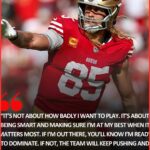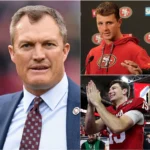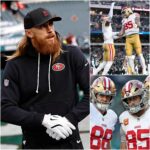

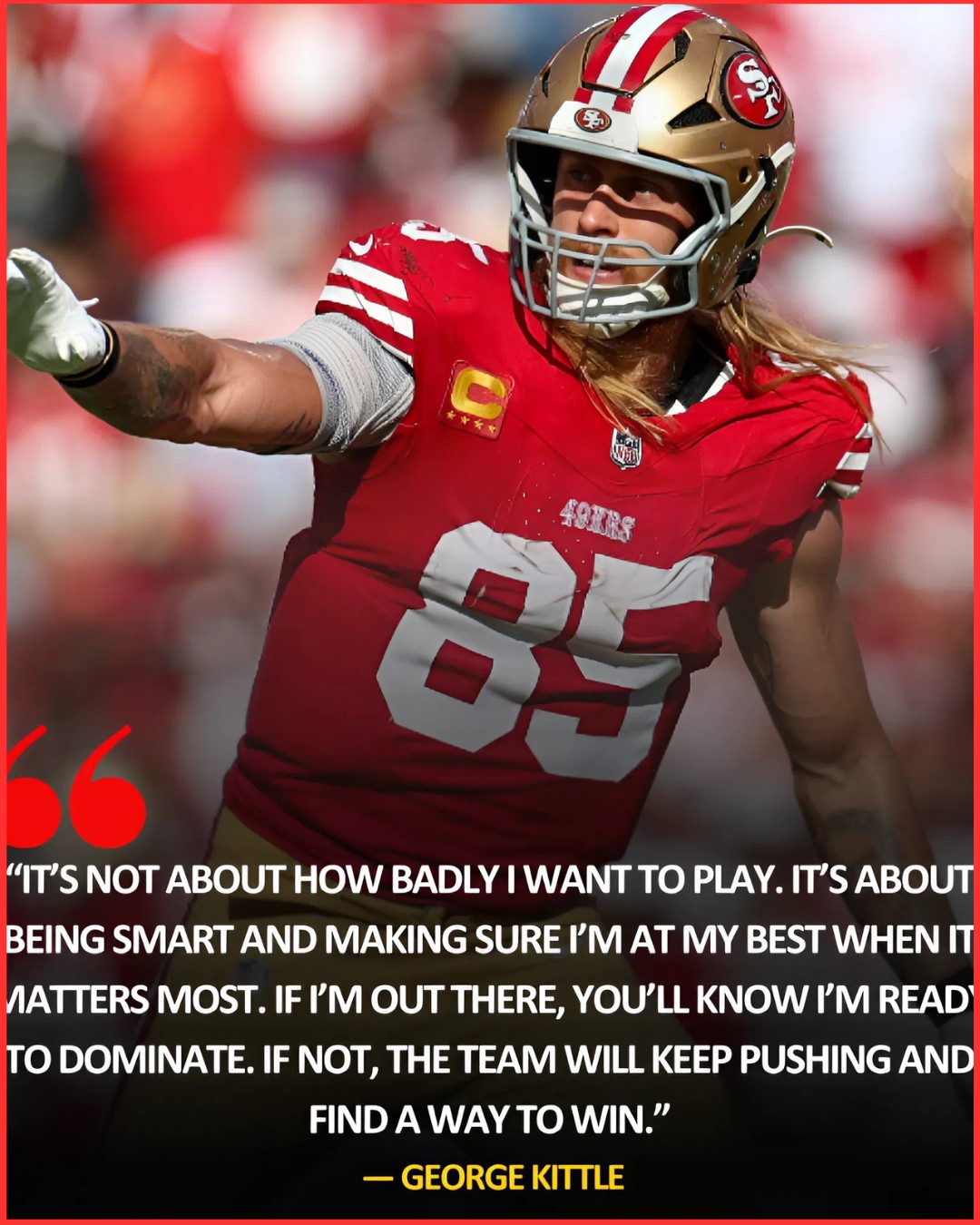
San Francisco 49ers tight end George Kittle is trending toward a true last-minute call for Sunday night. Reporter Cam Inman said that a KBNR radio spot with 49ers general manager John Lynch described Kittle as “likely a game-time decision” as he tries to rush back from an ankle injury suffered on Monday Night Football, ahead of the matchup with the Chicago Bears.

That phrasing matters because it signals Kittle’s status may not be resolved until warmups, meaning the 49ers could be forced to prepare two game plans: one with their All-Pro caliber tight end, and one without him.
What John Lynch’s “Game-Time Decision” Note Really Signals
A “game-time decision” typically means a player’s availability will hinge on how the injury responds over the final 24-48 hours, and, crucially, how it feels during pregame movement: cutting, planting, blocking leverage, and absorbing contact.
For a tight end, the functional checklist is even more specific. Kittle isn’t just a pass catcher; he’s a core piece of the 49ers’ run game and protection packages. If the ankle can’t hold up under drive blocking and change-of-direction routes, the team may decide it’s safer to hold him out rather than risk aggravation.
Key details to know right now:
- Who: George Kittle
- What: Ankle injury suffered on Monday Night Football
- Update: John Lynch says Kittle is “likely a game-time decision”
- When: Sunday night vs. the Chicago Bears
- Why it’s big: The call may not come until pregame
What It Means for the 49ers’ Offense vs. the Bears
If Kittle can’t go (or is limited), San Francisco would likely have to redistribute targets and reps across the tight end room and adjust some of the heavy personnel looks the team likes to feature.
That can show up in a few practical ways:
- Fewer true “Y” tight end snaps if Kittle can’t handle the blocking workload.
- More receiver-heavy groupings to keep the passing game on schedule.
- More quick-game concepts to reduce time in protection, depending on the matchup up front.
- A different red-zone menu, since Kittle is a key piece of many condensed-field looks.
Even if Kittle is active, “game-time decision” players can sometimes be used situationally, meaning his snap count and role could still be something to watch early.
Kittle’s availability matters because he’s been one of San Francisco’s most efficient chain-movers and red-zone weapons this season. In 2025, he has 52 catches for 599 yards and 7 touchdowns, giving the 49ers a reliable middle-of-the-field target and a major mismatch against linebackers and safeties. Even beyond the box score, his blocking is a key driver of the 49ers’ run-game identity.
What to Watch Over the Next 24 Hours
Because this is being framed as a Sunday night decision, the biggest signals will likely be:
- How he’s listed on the final injury report (questionable vs. out is the obvious swing).
- Any pregame reports about how he looks moving and cutting.
- Inactive list confirmation, since that’s when the suspense ends.
Either way, this is the kind of late-week uncertainty that can create real pressure on the 49ers’ offensive identity—especially against an opponent that can force you to stay disciplined in the run game and win on third down.
NFL’s No. 1 Sought-After Running Back Shocks League by Rejecting 9 Teams, Ready to Re-Sign with the Packers when the Super Bowl opportunity approaches

In an NFL offseason increasingly defined by ruthless bidding wars and soaring price tags,
Kenneth Gainwell has delivered the most stunning decision of the year — not with a signature, but with nine offers he flatly refused.
According to multiple league executives, the price to secure Gainwell’s services climbed toward
$80 million, a figure rarely attached to a running back in today’s NFL. Yet instead of chasing the market, the league’s most coveted back made a choice that sent shockwaves across football:
he wants to stay in Green Bay, with one unmistakable objective — bringing a Super Bowl to the Packers.
That decision carries even more weight when viewed through the lens of Gainwell’s explosive
2025 season. He finished the year with 1,620 total yards from scrimmage, averaged 5.1 yards per carry, and scored seven touchdowns, including five game-defining scores in the second half or fourth quarter. He also emerged as
Green Bay’s most reliable receiving back, catching 62 passes for 410 yards and ranking among the Top 5 running backs in the NFL in first downs created.
But the numbers only tell part of the story.
Gainwell became the engine of the Packers’ offense — the trusted option on third down, the stabilizer in the red zone, and the closer in late-game situations where composure matters most. When Green Bay needed to control tempo, they leaned on him. When momentum had to be flipped, his number was called.
That complete skill set ignited interest across the league. Nine NFL teams — from Super Bowl contenders to franchises eager to rebuild around an elite offensive centerpiece — aggressively pursued Gainwell. Yet those close to the situation insist his stance never wavered.
Green Bay was always the priority.
In a deeply personal statement, Gainwell explained why he turned down generational money to remain with Green Bay Packers:
“My heart chose Green Bay a long time ago, long before the numbers ever hit the table,” Gainwell said. “I know there are big contracts and tempting promises out there, but nowhere gives me a sense of belonging like this place — where they believe in me, trust me with responsibility, and fight alongside me every Sunday. I’m not staying for comfort. I’m staying because I believe this is where we can go all the way and bring a Super Bowl back to this city.”
In a league that increasingly treats running backs as interchangeable assets, Gainwell is rewriting the narrative. He isn’t just a star — he is a foundational pillar of the Packers’ offense
, and a reflection of the culture Green Bay is building around trust, accountability, and championship belief.
The numbers will still be negotiated.
The contract will eventually be signed.
But one thing is already undeniable:
Kenneth Gainwell didn’t turn down nine teams for security — he did it because he believes Green Bay can take him to the ultimate destination: the Super Bowl.
HH. BREAKING: Harrison Smith smiled — and it meant far more than a single win.