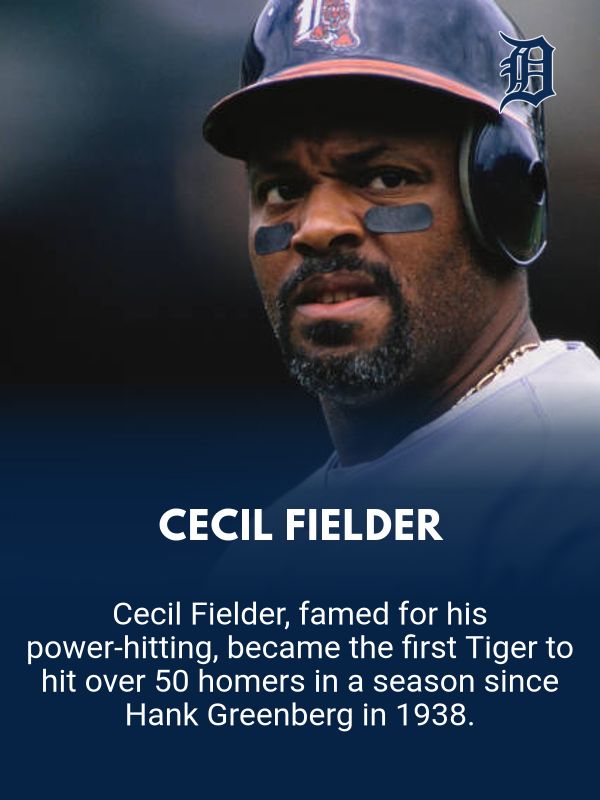
Cecil Fielder’s career with the Detroit Tigers is remembered not just for towering home runs, but for the moment he reawakened a franchise’s identity through sheer strength, confidence, and presence. At a time when Detroit was searching for a new face of power, Fielder didn’t just arrive — he announced himself with a season that became part of baseball history.
A Journey That Took the Long Way Back
Before becoming a household name in Detroit, Fielder’s path to stardom was anything but straightforward. After struggling to find consistent opportunities early in his MLB career, he made the bold decision to play in Japan. There, away from the spotlight of American baseball, he refined his approach at the plate, rediscovered his confidence, and learned how to harness his raw power with discipline.
When he returned to Major League Baseball, he was no longer just a promising slugger looking for a chance. He was a finished product — stronger, more patient, and fully aware of his ability to change games with one swing.
The Historic 1990 Season
Everything came together in 1990. Fielder unleashed one of the most dominant power displays the league had seen in years, crushing 51 home runs and becoming the first player since George Foster in 1977 to surpass the 50-homer mark in a single season.
For the Detroit Tigers, the significance ran even deeper. The franchise had not seen a power performance like this since Hank Greenberg’s legendary 1938 season, more than half a century earlier. Fielder didn’t just break barriers — he bridged generations, linking modern Tigers baseball to its storied past.
Each home run felt monumental. Fans packed Tiger Stadium knowing that at any moment, Fielder could send the ball soaring into the seats. His imposing frame in the batter’s box became a symbol of intimidation, and pitchers approached him with visible caution.
A Beloved Figure in Detroit
Beyond the numbers, Fielder’s connection with Detroit was personal. He played with emotion, embraced the city’s blue-collar spirit, and carried himself with a confidence that resonated with fans. His power wasn’t flashy — it was overwhelming. He didn’t need theatrics; the sound of the bat did the talking.
For many Tigers fans, Fielder represented hope during a transitional era — proof that greatness could still wear the Old English “D” across its chest.
Life After the Final Swing
After retiring, Fielder never drifted far from the game that defined him. He remained involved in baseball through coaching, mentoring, and advisory roles, passing on hard-earned wisdom to younger players navigating the same challenges he once faced.
Perhaps most meaningfully, he also played a supportive role in the remarkable MLB career of his son, Prince Fielder, watching as power once again ran in the family — this time across generations. Their shared legacy stands as one of baseball’s rare father-son success stories, built on discipline, resilience, and an unbreakable love for the game.
A Lasting Legacy
Cecil Fielder’s time with the Detroit Tigers was more than a statistical achievement. It was a reminder of how one player, arriving at exactly the right moment, can redefine a franchise’s energy and identity.
Decades later, his 1990 season still echoes in Detroit lore — a year when power returned, history was honored, and a city fell in love with a slugger who swung as hard as he believed. ⚾🔥