Tesla has once again thrown itself into the spotlight—this time not with a car launch or a humanoid robot demonstration, but with a semiconductor deal that could reshape the future of artificial intelligence in America.
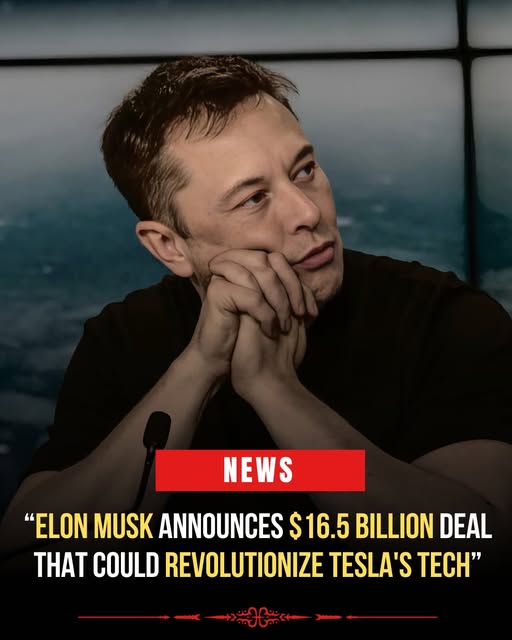
This week, the electric vehicle giant announced a landmark $16.5 billion agreement with South Korea’s Samsung Electronics to manufacture Tesla’s next-generation AI6 chips. The chips will be produced at a Texas facility, marking one of the largest U.S.-based semiconductor investments tied directly to artificial intelligence.
The news immediately jolted the markets: Tesla stock rose 4.2% by the end of the day, signaling investor confidence that the company is doubling down on AI as the core of its long-term growth.
But beyond the stock bump, the deal highlights broader shifts—technological, geopolitical, and cultural—that could define Tesla’s trajectory over the next decade.
What Are the AI6 Chips?
The AI6 is Tesla’s next-generation custom silicon, designed to be the beating heart of its most ambitious projects:
Full Self-Driving (FSD) system: powering the complex neural networks that allow Tesla vehicles to perceive, predict, and act on road conditions.
Optimus humanoid robots: enabling real-time processing for balance, movement, and decision-making in dynamic human environments.
Broader AI applications: from Tesla’s Dojo supercomputer to potential future products in energy, robotics, and logistics.
According to Tesla engineers, the AI6 represents a leap over the current FSD chips, with significantly higher throughput, lower latency, and vastly improved energy efficiency. By anchoring production in Texas, Tesla gains a major advantage in supply chain resilience, reducing reliance on overseas fabs at a time when semiconductor shortages and geopolitical tensions are front-page news.
Why Samsung?
Tesla has a history of collaborating with semiconductor giants, including TSMC. But this partnership with Samsung is significant for two reasons:
Texas as a manufacturing hub: Samsung already operates advanced chip facilities in Austin and is expanding in Taylor, Texas. By producing chips domestically, Tesla ensures tighter integration between design and manufacturing while aligning with U.S. political priorities on reshoring semiconductors.
Shared ambition in AI: Samsung has made AI a strategic priority, from smartphones to servers. Tesla’s AI6 chips will benefit from Samsung’s expertise in high-performance, cutting-edge process nodes.
Industry insiders suggest the deal also reflects Elon Musk’s preference for diversifying partnerships, ensuring Tesla isn’t overly dependent on any single supplier such as TSMC—especially amid rising tensions in Taiwan.
The Financial and Market Impact
At $16.5 billion, the agreement is one of the largest semiconductor-related commitments made by a private company in the U.S. this decade.
Investors responded with enthusiasm. Analysts at Wedbush Securities called it a “pivotal moment in Tesla’s AI narrative,” arguing that the company has successfully repositioned itself from a carmaker to an AI and robotics leader.
“Tesla isn’t just a car company—it’s building the hardware and software stack for the AI economy,” said analyst Dan Ives. “This Samsung deal secures Tesla’s role in the next era of computing.”
Still, not everyone was convinced. Some Wall Street skeptics noted that Tesla’s automotive sales have slowed and its FSD program remains under regulatory scrutiny. They argued that the AI6 chips might not solve Tesla’s near-term profitability challenges.
AI as Tesla’s North Star
The deal underscores what Elon Musk has repeatedly told investors: Tesla’s future is not just about cars.
For years, Musk has insisted that the company is an AI powerhouse disguised as an automaker. Tesla’s Dojo supercomputer, designed to train the company’s neural networks at unprecedented scale, is one piece of the puzzle. The AI6 chips are another—ensuring that the processing power in Tesla’s vehicles and robots matches the ambitions of its software.
By controlling its own AI hardware stack, Tesla mirrors Apple’s approach with its custom silicon, where vertical integration leads to performance gains and a moat against competitors.
Political and Strategic Implications
The timing of the deal also matters. The U.S. government has pushed aggressively for domestic semiconductor production, framing chips as a matter of national security. With CHIPS Act subsidies flowing into states like Texas and Arizona, Tesla’s move bolsters Washington’s agenda.
“Tesla’s investment in U.S. chipmaking represents the type of private-sector partnership we’ve been calling for,” said one Commerce Department official. “This strengthens America’s technological leadership in AI.”
There are also geopolitical dimensions. By choosing Samsung over Taiwanese or Chinese partners, Tesla is signaling alignment with U.S. allies while hedging against risks of supply chain disruption in East Asia.
FSD and the Roadblocks Ahead
Still, questions linger about Tesla’s flagship AI application: Full Self-Driving. Despite years of promises, the system remains in beta, facing regulatory hurdles, safety concerns, and high-profile crashes.
Critics argue that better chips alone won’t fix the deep challenges of FSD. “It’s not just about processing power—it’s about real-world complexity, regulatory acceptance, and public trust,” said Bryant Walker Smith, a law professor specializing in autonomous vehicles.
But Tesla insists the AI6 is essential for scaling FSD beyond its current limitations. With more powerful hardware, the company says it can run more advanced neural networks directly in the vehicle, reducing reliance on cloud processing and making cars safer, faster, and smarter.
The Optimus Factor
Perhaps the most intriguing application of the AI6 chips is Optimus, Tesla’s humanoid robot project.
While skeptics mocked the first prototype—derided as a clumsy demo in 2022—Tesla has continued to invest heavily. Musk claims Optimus could one day revolutionize manufacturing, logistics, and even personal care.
For such tasks, robots need chips that can handle massive amounts of sensor data, process real-time environments, and make split-second decisions. The AI6 could provide exactly that.
“Robots are just cars with legs,” Musk quipped at a recent event. “They need the same brainpower, and now they’ll have it.”
The Supply Chain Advantage
The COVID-19 pandemic exposed vulnerabilities in global supply chains, particularly for semiconductors. Automakers worldwide were forced to halt production due to chip shortages. Tesla was hit too, though it weathered the storm better than some rivals by rewriting software to accommodate alternative chips.
With AI6 production localized in Texas, Tesla gains a buffer against future disruptions. This not only reassures investors but also appeals to regulators who have stressed the importance of domestic resilience.
Risks and Criticisms
Despite the optimism, risks abound.
Execution risk: Manufacturing cutting-edge chips is notoriously difficult. Even with Samsung’s expertise, delays or yield problems could undermine Tesla’s timelines.
Financial exposure: $16.5 billion is a massive sum. If AI6 fails to deliver or FSD continues to stall, Tesla could face criticism for overextending.
Public skepticism: Some consumers remain wary of Tesla’s AI ambitions, especially after incidents involving Autopilot crashes. More powerful chips might fuel fears of “overpromising” technology that isn’t fully ready.
What It Means for Tesla’s Identity
The deal cements Tesla’s transition from being seen primarily as an automaker to being recognized as an AI-driven technology company. While vehicles remain its core business today, the AI6 and the Samsung partnership show where Tesla’s leadership believes the future lies.
“Tesla is no longer competing with Ford and GM,” said one analyst. “It’s competing with Nvidia, Google, and OpenAI. That’s the playing field Musk has chosen.”
Conclusion: Betting It All on AI
Tesla’s $16.5 billion agreement with Samsung is more than a business deal. It’s a declaration of intent. At a time when its sales are slowing and its self-driving program is under scrutiny, Tesla is doubling down on its boldest bet: that artificial intelligence will define the company’s future.
If the AI6 chips deliver on their promise, Tesla could dominate not just electric cars but also robotics, logistics, and AI computing. If they fail, the company risks burning billions and further testing investor patience.
For Elon Musk, however, there is no middle ground. As he told investors last year:
“Tesla is an AI company. The cars are just the first robots.”
And now, with Samsung as its partner and Texas as the production hub, the AI revolution Musk envisions is one step closer to silicon reality.