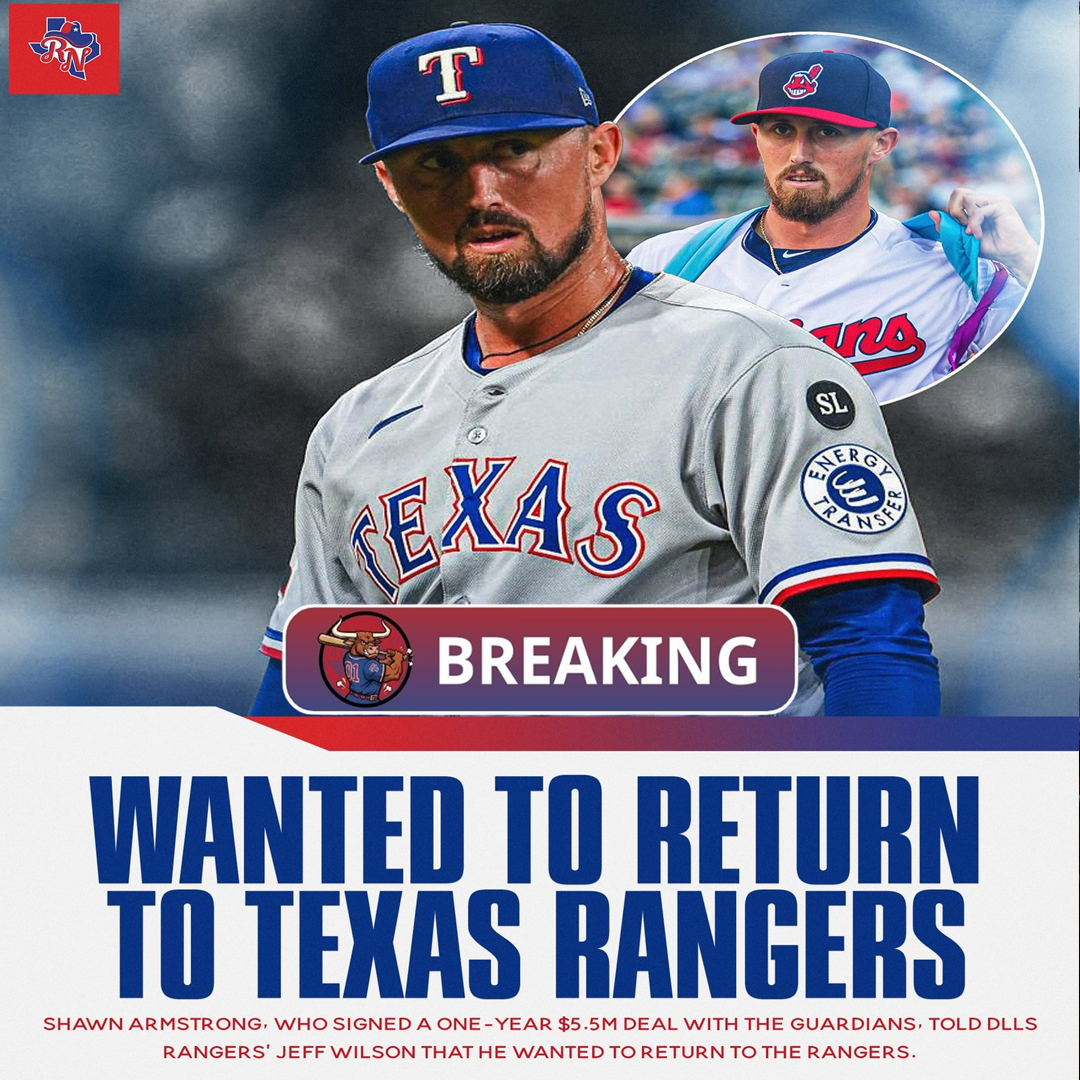
Armstrong spent last season with Texas on a one-year, $1.25 million deal, providing steady bullpen innings and earning respect inside the clubhouse. By all accounts, the Rangers valued his presence and production. The problem wasn’t fit. It was finances.
As Texas continues to explore payroll reductions this offseason, the front office simply couldn’t stretch to meet the price Armstrong drew on the open market. With reliever demand climbing and bullpen depth at a premium, Armstrong’s market moved faster — and higher — than the Rangers were prepared to follow.
For the 35-year-old, the decision became a matter of timing and reality rather than preference. Cleveland stepped in with a clear role and a significantly stronger financial commitment, offering both security and opportunity that Texas, constrained by budget strategy, couldn’t match.
It’s a familiar story across MLB this winter: teams tightening spending while veterans who outperform their contracts capitalize when the market opens. Armstrong did exactly that.
While a reunion in Texas didn’t materialize, there appears to be no bitterness — only understanding. The Rangers made a calculated choice aligned with their payroll plan. Armstrong made the logical move for his career.
And now, as he joins Cleveland’s bullpen, the Rangers are left to fill a gap — knowing that sometimes, the price of flexibility is letting reliable arms walk away.