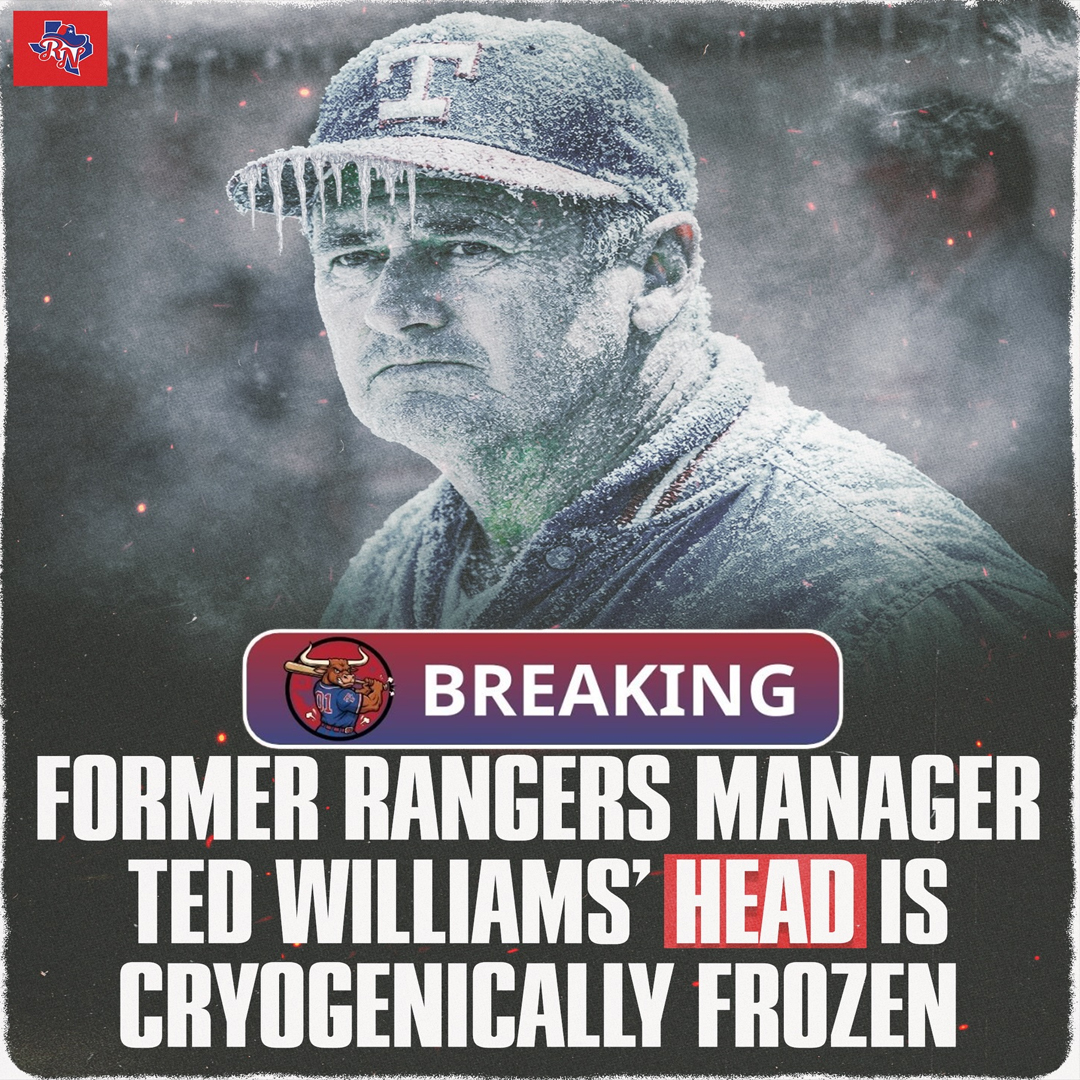
Few names in sports history carry the mythic weight of Ted Williams. A two-time Triple Crown winner, a war hero, and one of the greatest hitters baseball has ever known, Williams spent his life defined by excellence, discipline, and fierce independence. Yet in death, the Hall of Famer became the center of one of the most disturbing and controversial sagas the sport has ever seen—one that still raises ethical, legal, and deeply human questions more than two decades later.
When Ted Williams died in July 2002 at the age of 83, many assumed his final wishes were clear. According to his will, Williams wanted to be cremated and have his ashes scattered at sea, a fitting farewell for a man who loved fishing as much as baseball. What followed instead shocked the sports world.
A Body Divided
Rather than cremation, Williams’ remains were sent to the Alcor Life Extension Foundation in Arizona, one of the world’s most prominent cryonics facilities. At the direction of his son, doctors performed a procedure known as neuroseparation, severing Williams’ head from his body so both could be preserved separately in liquid nitrogen.
His body was stored upright in a nine-foot cryogenic tank. His head—what Alcor refers to as the “neuro”—was sealed in a steel container and frozen at temperatures far below zero, with the speculative hope that future technology might one day revive preserved brains.
For many fans, the revelation was surreal. For Williams’ family, it was devastating.
A Family at War Over a Legend’s Wishes
Almost immediately, Williams’ children were divided. One daughter publicly stated that her father opposed cryonics and would have been horrified by the idea of being frozen after death. She insisted that the decision betrayed his explicit wishes.
In response, Williams’ son and another daughter produced a handwritten note, allegedly signed by Williams, claiming he agreed to cryonic preservation so the family could “be together in the future.” The authenticity and context of that note have been debated ever since, with critics questioning whether it truly reflected informed consent—or a casual remark elevated into a life-altering decision.
The legal battles were bitter, emotional, and highly public, turning a baseball icon’s death into a courtroom drama that many felt tarnished his legacy.
Disturbing Allegations Inside the Cryonics Lab
Years later, the controversy deepened.
A former Alcor employee came forward with shocking allegations about how Williams’ frozen head was handled. According to his account, the head was mishandled during storage, including an incident in which a monkey wrench was allegedly used to remove a tuna can frozen to Williams’ head. The employee claimed the force caused cracking and damage.
His written statement was haunting:
“Tiny pieces of frozen head sprayed around the room.”
The same former employee also alleged that several of Williams’ DNA samples were missing, raising further questions about oversight, preservation standards, and ethical responsibility.
Alcor has categorically denied these allegations, maintaining that Williams’ remains were treated with respect and that proper procedures were followed. No definitive public evidence has resolved the conflicting claims.
A Legacy Suspended Between Science and Unease
Today, Ted Williams remains cryopreserved in Arizona—neither buried nor cremated, neither gone nor truly at rest. His condition embodies the unresolved tension between scientific ambition and human dignity, between the hope of future resurrection and the sanctity of final wishes.
For fans, the story is unsettling not just because of its graphic details, but because it forces a reckoning: What do we owe our heroes after death? Is it enough to preserve their bodies if we fracture their legacy? Does the promise of future technology justify overriding clearly stated wishes—or disputed ones?
Baseball’s Coldest Story
In a sport built on nostalgia, memory, and reverence for the past, Ted Williams’ afterlife stands apart as something almost unbaseball-like—clinical, frozen, and unresolved. His swing is immortal. His statistics are eternal. But his body remains suspended in liquid nitrogen, a silent reminder that greatness does not protect anyone from controversy.
More than twenty years later, the questions still linger.
Was this what Ted Williams truly wanted? Was science honored—or humanity ignored?
Until those questions find peace, the final chapter of one of baseball’s greatest figures remains chillingly unfinished.