

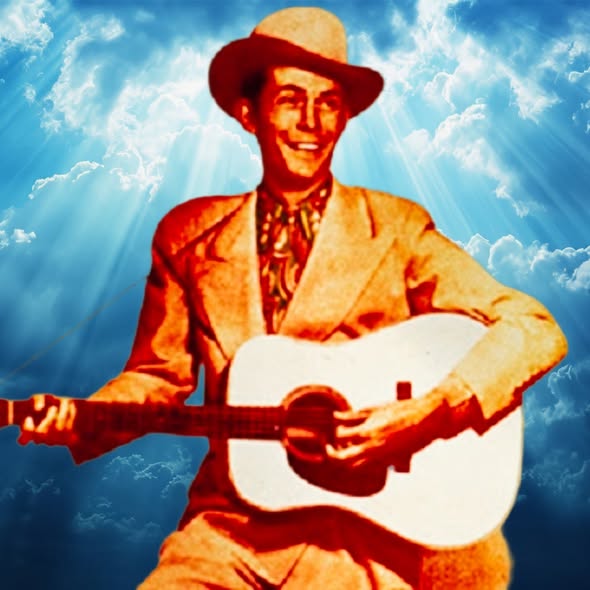
On this day, the world pauses—whether it realizes it or not—to remember Hank Williams, a voice that burned bright, fast, and forever altered the soul of country music. Seventy-plus years after his passing, the silence he left behind still echoes through jukeboxes, radio waves, and lonely highways where his songs feel less like recordings and more like confessions.
Hank Williams didn’t just sing country music. He lived it. Every lyric felt handwritten by hardship, every melody shaped by joy that never quite stayed long enough. Born in Mount Olive, Alabama, in 1923, Williams came from modest roots, raised amid gospel hymns, porch-side fiddles, and the deep emotional honesty of Southern storytelling. Music wasn’t an escape for him—it was a necessity.
By his early twenties, Hank had already carved a sound that felt timeless. Songs like “Your Cheatin’ Heart,” “I’m So Lonesome I Could Cry,” and “Cold, Cold Heart” weren’t polished fantasies. They were raw truths. Heartbreak didn’t need explanation in Hank’s voice—it simply existed, aching and familiar. Listeners didn’t just hear his songs; they recognized themselves inside them.
Yet behind the fame was a man unraveling. Williams’ rise came with relentless touring, physical pain from a lifelong spinal condition, and personal struggles that no chart-topping success could cure. The brighter the spotlight grew, the heavier the weight became. His performances were electric, but fragile—audiences never knew if they were witnessing greatness or a goodbye.
And then, on January 1, 1953, the music stopped.
At just 29 years old, Hank Williams was gone, found lifeless in the backseat of his car while traveling to a New Year’s Day performance. The news stunned the nation. A voice that felt eternal had been silenced in an instant. Fans mourned not just the man, but the songs he never had the chance to write—the verses that would remain forever unfinished.
Yet Hank Williams never truly left.
His influence became the foundation of modern country music. Legends like Johnny Cash, George Jones, Willie Nelson, and countless others carried his spirit forward. Rock musicians, folk singers, and songwriters across genres borrowed from his honesty, his vulnerability, and his refusal to hide pain behind polish. Hank taught the world that music didn’t need perfection—it needed truth.
Today, his songs still feel alive. They play in quiet kitchens at midnight. They drift through open windows on long drives. They find people exactly when they need to be found. Time hasn’t aged them—it has deepened them.
Remembering Hank Williams isn’t about mourning a tragedy alone. It’s about honoring a legacy that proved art can be brief yet eternal. That a broken heart can change the world. That a simple melody, sung honestly, can outlive generations.
Lost on this day—but never forgotten.
Hank Williams remains country music’s eternal voice, still sing