

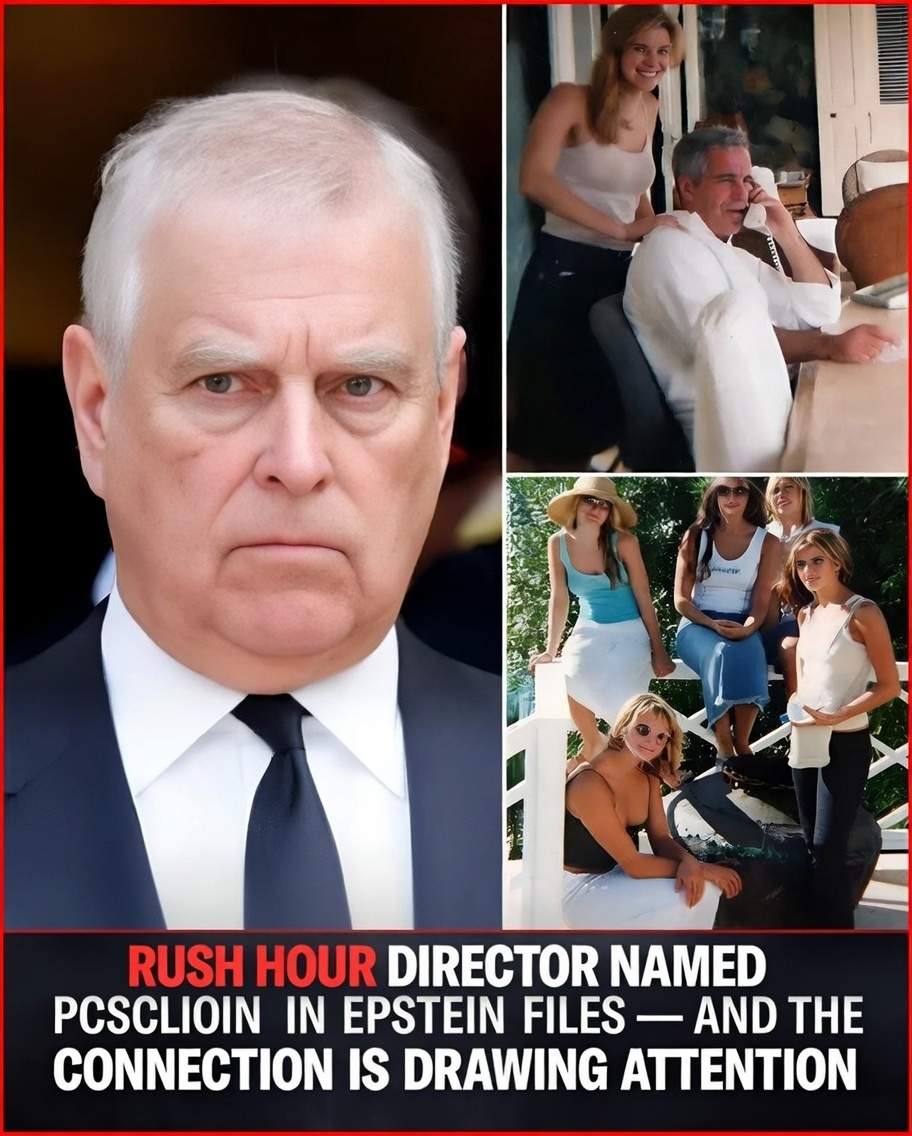
The continued release of documents tied to the Jeffrey Epstein investigation is once again reshaping public conversation—not through new accusations, but through names, images, and proximity that prompt scrutiny in their own right.
Among the figures recently drawing attention is Brett Ratner, the director behind the globally successful Rush Hour franchise and a filmmaker currently attached to a forthcoming documentary project involving First Lady Melania Trump.
According to multiple reports, Ratner appears in a photograph contained within the Epstein files. Authorities have not accused Ratner of any criminal wrongdoing, and no charges or formal allegations have been made against him. As with many others referenced in the documents, the presence of a name or image does not in itself indicate illegal conduct.
Still, the mention has been enough to reignite public debate.
Documentation vs. Accusation: A Critical Distinction
As additional Epstein-related records are unsealed, a familiar and uncomfortable tension continues to surface: the gap between being documented and being accused.
Legal experts and investigators have repeatedly stressed that these files primarily map associations, contacts, and social environments—not guilt. Yet in the court of public opinion, visibility alone often carries weight.
Ratner’s inclusion has therefore prompted renewed discussion about the breadth of Epstein’s social and professional circles, which historically extended into finance, politics, academia, media, and entertainment. The question many observers are now asking is not what crimes were committed, but how power, access, and influence intersected around Epstein for so long.
Why This Name Resonates Now
The renewed attention surrounding Ratner is amplified by timing and context.
First, the Epstein document releases are ongoing, creating a cumulative effect where each new name adds to a larger narrative rather than standing alone. Second, Ratner’s current association with a high-profile documentary project connected to the former First Lady has placed him back into public view—making any mention feel more consequential.
This convergence has fueled online discussion, media analysis, and calls for transparency, even as outlets repeatedly emphasize that no wrongdoing has been alleged.
The Broader Pattern Emerging From the Files
Ratner is far from the only public figure to be referenced without accusation. As more records become public, a pattern is emerging—one that highlights how Epstein’s network functioned less as a criminal ledger and more as a social map of elite access.
For the public, that distinction can be frustrating. Many are searching for clear answers in documents that instead raise broader, unresolved questions:
- Who moved in these circles?
- How normalized was proximity to Epstein before his crimes were widely known?
- And why did accountability take so long to materialize?
The files, by design, do not answer all of these questions. But they continue to keep them alive.
Public Interest, Not Legal Judgment
As with other figures referenced in the Epstein materials, Brett Ratner’s appearance in the files has sparked interest, not indictment. Journalistic standards—and legal reality—require a clear separation between inclusion in documentation and implication of guilt.
Still, public attention is intensifying as the releases continue, reflecting a broader societal reckoning with how influence and silence can coexist for years before scrutiny finally arrives.
For now, the story remains less about individual accusations and more about context, connections, and accountability—and how much the public is willing to accept unanswered.
As more documents are released, that tension is unlikely to fade anytime soon.