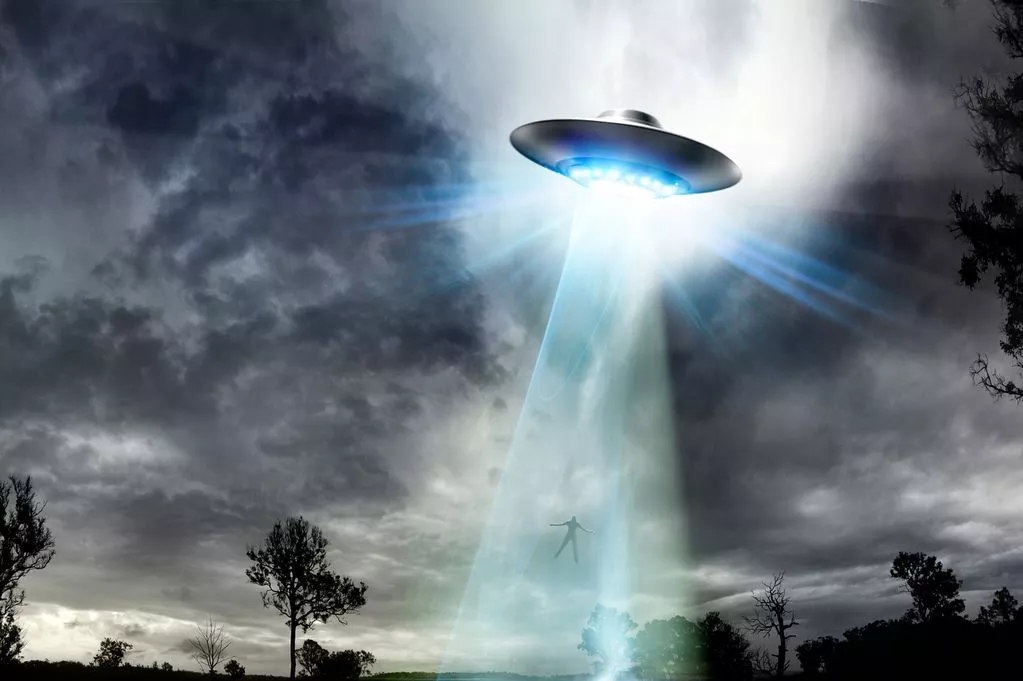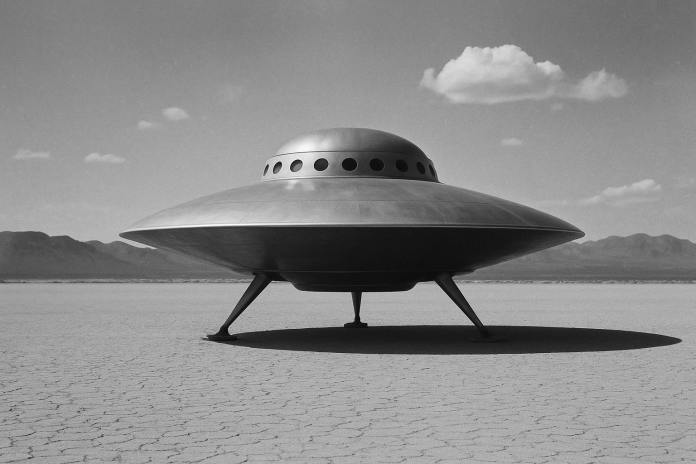


The Ukrainian Academy of Sciences and Harvard University astrophysicist Avi Loeb criticized a recent report of a jet-black UFO flying over Kiev.

A recent report of unidentified aerial phenomena (UAP) flying over Ukraine has been officially rejected by the country’s national science agency due to “serious errors” in the research methods and results. The report, published in mid-September by a team of scientists at the Kiev Astronomical Observatory (MAO), described “a large number of objects of unknown nature ,” including “ghosts” that appeared completely black against the sky and flew through the atmosphere at a speed of 53,000 km/h, nearly twice as fast as an intercontinental ballistic missile.
The report’s authors called the “phantoms” UAPs, or unidentified flying objects (UFOs), but did not attempt to rule out some of the more obvious explanations, such as satellites, drones, or artillery used in Russia’s current campaign in Ukraine, which began about half a year earlier. Now, the National Academy of Sciences of Ukraine (NASU) has concluded a study of the report and dismissed its conclusions as lacking professionalism and scientific rigor.
“The processing and interpretation of the results were conducted at an inappropriate scientific level and with serious errors in determining the distance to the observed object,” the NASU scientific committee said. They stressed that the report “does not meet the professional requirements for publishing the results of scientific research” and asked that NASU’s name be removed from the document.
In the report, the MAO team analyzed observations of fast-moving objects detected by one of two observatories near Kiev. They inferred the objects’ distance, size, and speed based on the amount of background light they blocked, concluding that many of the mysterious objects were as large as airplanes but moving through the air at spacecraft speeds.
But by looking at data from only one telescope, the researchers appear to have incorrectly predicted the objects’ distances and locations, and therefore their sizes and speeds, according to Avi Loeb, an astrophysicist at Harvard University. “The correct method for deducing distances is called triangulation (a technique in trigonometry and geometry), where you look at the same object from different directions. But they didn’t have that data,” Loeb said.
If the “ghost” objects were as large and fast-moving as the team describes, each would have created a giant fireball, similar to a rocket or meteorite, as it passed through the atmosphere. In fact, the fact that they were jet-black does not prove they were alien technology, but rather that astronomers miscalculated the objects’ relative positions.
Loeb points out that the Ukrainian team likely miscalculated the distance to the object by a factor of 10. If the “ghosts” were dozens of times closer to the camera than the researchers concluded, they would match the size and speed of artillery shells, which are common in war zones like Ukraine. Move the objects 10 times closer to the camera again, and they would resemble bullets.
NASU appears to have reached a similar conclusion in its investigation of the report, noting that astronomers not only made a “serious error” in determining the object’s distance, but also failed to rule out a more obvious explanation. The report’s authors make no mention of natural phenomena or artificial objects of Earth origin that could have been among the observed UAPs.